Newsletter IV/2026 - ‘Memorial sites must intervene politically wherever necessary.’

‘Memorial sites must intervene politically wherever necessary.’

Remembrance culture thrives on new societal impulses, but politics also plays an important role in steering, promoting or hindering ideas. We spoke about this with Dr Klaus Lederer, who served as Deputy Governing Mayor of Berlin and Senator for Culture and Europe from 2016 to 2023. During this time, he worked closely with the House of the Wannsee Conference Memorial and Educational Site. How does he look back on his time in office?

Eine Diskussionsrunde mit fünf Personen sitzt auf Stühlen auf einer Bühne. Im Hintergrund ist eine Präsentation mit dem Titel „Nach der Shoah – und dann?“. Die Teilnehmer diskutieren über die Auswirkungen der Shoah und gesellschaftliche Themen.
© GHWK, Jennifer Heidtke

Newsletter III/2026 - ‘Remembrance culture is identity politics’

‘Remembrance culture is identity politics’

Historian and journalist Leonie Schöler, known for the historical content she posts on social media, has written Beklaute Frauen, a book about women who have been denied recognition for their achievements. These include intellectuals, researchers and pioneers whose contributions have been deliberately concealed and forgotten. We are interested in her views on history, specifically regarding the culture of remembrance around National Socialism, in light of her professional background and from a gender perspective.

Das Buchcover zeigt ein Porträt einer nachdenklich blickenden Frau mit einem bunten, stilisierten Hintergrund. Der Titel „Beklaute Frauen“ sowie der Untertitel „Die unsichtbaren Heldinnen der Geschichte“ von Leonie Schöler sind prominent platziert. Das Buch wurde als Bestseller ausgezeichnet.

Newsletter II/2026 - Historical Markers in Berlin

We are wondering: Who is especially important for Berlin?

Which stories and locations are underrepresented on commemorative plaques? On behalf of the Berlin Senate, Nora Hogrefe has been serving for five years as head of the ‘Coordination Office for Historical Markers in Berlin’. The office is affiliated with the association Actives Museum, Fascism and Resistance in Berlin e.V. She is the contact person for all commemorative markers in public spaces, most notably, for the state’s own commemorative plaque programme.

Eine Gruppe von Menschen steht vor einem Gebäude, während jemand ein Tuch von einer Gedenktafel abzieht. Die Teilnehmer lächeln und zeigen Freude über die Enthüllung, die einen historischen oder kulturellen Anlass feiert.
© Aktives Museum

Newsletter I/2026 - ‘The site compels interest’

‘The site compels interest’

The memorial’s opening in 1992, on the 50th anniversary of the Wannsee Conference, was preceded by decades of debate over how best to address the site. This early period has now become part of the memorial’s history. In 2024 and 2025, we began conducting interviews with individuals who were a part of this history. We are presenting excerpts from three interviews conducted thus far. They address the memorial’s role in German remembrance culture, public knowledge of the Wannsee Conference, and the ‘mission’ of the new site.

Eine Person spricht an einem Rednerpult vor einem Publikum in einem Ausstellungsraum. Im Hintergrund sind mehrere Bild- und Text-Tafeln aufgestellt. Die Zuhörer sind überwiegend in formeller Kleidung und hören aufmerksam zu.
© GHWK

Newsletter XII/2025 - The End of the War in Germany, 1944/45. A Panopticon

The End of the War in Germany, 1944/45. A Panopticon

Eighty years after the unconditional surrender of the German army, political and social groups continue to draw very different lessons from this era. Prof. Annette Weinke, chair of our scientific advisory board, examines this chapter for us, describing the collapse of the Nazi regime and the Allies’ response to defeated Germany.

Eine Gruppe von Soldaten in Uniform steht auf Stufen vor einem großen, monumentalen Gebäude. Einige halten Flaggen, darunter auch die amerikanische Flagge. Die Szenerie wirkt feierlich und historisch.
© Wikimedia Commons

Remembrance as a Matter of National Interest?

German Remembrance Culture and Israeli Perspectives on Commemorating the Shoah - Invitation to the 84th anniversary of the Wannsee Conference, January 20, 2026, 3.30 p.m. to 9 p.m., at the House of the Wannsee Conference Educational and Memorial Site. Find more information here!

Die ehemalige Bundeskanzlerin Angela Merkel steht in einer Gedenkstätte und beugt sich respektvoll über ein Blumenarrangement. Im Hintergrund ist eine Flamme zu sehen, die für das Gedenken an die Opfer dient. Ein weiterer Mann steht im Hintergrund und beobachtet die Zeremonie.
© Oren ben Hakoon

Newsletter XI/2025 - ‘The Reich Ministry of Finance was a purely professional ministry.’

‘The Reich Ministry of Finance was a purely professional ministry.’

This is how Fritz Reinhardt, who served as State Secretary in the Reich Ministry of Finance throughout the twelve years of the Nazi era, described the agency in court on 14 October 1948. With this statement, he contributed to a post-war narrative that sought to exonerate all of the ministry’s employees at once. An essay by Silke Struck

Porträt eines Mannes in einem dunklen Anzug mit Krawatte. Er hat kurze, glatte Haare und trägt eine Anstecknadel auf der linken Brustseite. Der Blick ist nach rechts gerichtet, und das Bild vermittelt einen ernsten Ausdruck.
© ÖNB

Newsletter X/2025 - The Berlin Police after World War II

The Berlin Police after World War II

Although the German police were highly complicit in the crimes committed by the Nazis, after the war ended, the help of the police was urgently needed in Germany’s reconstruction. The Allies efforts to reorganise the police force warrant a closer look. An essay by our colleague Dr Jakob Müller.

Sechs Personen stehen nahe Gleisen, umgeben von einem Holzstapel im Hintergrund. Einige der Personen sind Erwachsene, andere Kinder. Sie scheinen zu sprechen und schauen aufeinander. Die Szenerie vermittelt eine ernste, historische Stimmung.
© BArch, 183-N0207-366

Newsletter IX/2025 - Breaking the Silence: The Nursing Profession in Nazi Germany and its Reappraisal after 1945

Newsletter VIII/2025 - Sachsenhausen After Liberation in 1945

Sachsenhausen After Liberation in 1945: Preserving Evidence, Repatriation, Special Camp

The Sachsenhausen concentration camp operated as a place of imprisonment and terror for nearly nine years. It continued to function as a detention site even after the evacuation of the camp in April 1945 and its subsequent liberation by Soviet and Polish troops. Dr Enrico Heitzer traces the complex and sometimes controversial history of the camp in Sachsenhausen in 1945.

Das Bild zeigt eine historische Ansicht eines Geländes mit mehreren einfachen Gebäuden, umgeben von Bäumen. Menschen gehen auf einem gepflasterten Weg und scheinen sich in der Umgebung zu bewegen. Die Szene strahlt eine ruhige, aber verlassene Atmosphäre aus.
© Gedenkstätte Sachsenhausen, René Kerschen

Newsletter VII/2025 - The Reich Chamber of Fine Arts in 1945

The Reich Chamber of Fine Arts in 1945

In the spring of 1945, the Reich Chamber of Fine Arts (Reichskammer der bildenden Künste, RdbK) was nearing its final days of existence. Although the Allied troops were advancing further into the German Reich, the Nazi cultural administration continued to do its job. How did this institution, which had dictated artistic life in the German Reich since 1933, manage during its final months, and what new structures emerged in the occupation zones after the war ended?

Die Schwarz-Weiß-Fotografie zeigt ein Gebäude mit einem großen Banner, auf dem „Entartete Kunst“ steht. Es handelt sich um die Ankündigung einer Ausstellung in Berlin, die von der NSDAP organisiert wurde. Alte Autos parken vor dem Gebäude.
© DHM, Berlin

Visit our Garden Exhibition

On the Roof of Himmler's Guesthouse - The U.S. Army in Wannsee in 1945 Special exhibition, including an audio walk, in the garden of the House of the Wannsee Conference Memorial and Educational Site. June 19, 2025, to June 30, 2026, open daily 10 am to 6 pm, admission free.

Einfarbiger Hintergrund mit dem Text "On the Roof of Himmler's Guesthouse" in großem, auffälligem Schriftzug. Darunter steht in kleinerer Schrift "Die U.S. Army 1945 am Wannsee" mit einem Datumsbereich von "19.6.25–30.6.26". Die Gesamtatmosphäre ist historisch und informativ.

Newsletter VI/2025 - Postwar Continuities in German Radio

Josef Pelz von Felinau: An Example of Postwar Continuities in German Radio

Despite the many breaks and new beginnings in 1945, broadcasting did not experience a zero hour. As in virtually all areas of society, personnel continuity was the rule, illustrated here by the example of Josef Pelz von Felinau. ‘Hypnose’, written by Josef Pelz von Felinau, was the first radio play aired on German radio after the war.

Ein Mann in einem Anzug sitzt an einer Schreibmaschine und lächelt. Hinter ihm sind Vorhänge und eine Stehlampe sichtbar. Auf dem Tisch liegen einige Schreibutensilien. Die Szene strahlt eine nostalgische Büroumgebung aus.
© Deutsche Fotothek / Fritz Eschen

Newsletter V/2025 - ‘This entire denazification issue is highly complicated’ – On German Film After 1945

‘This entire denazification issue is highly complicated’ – On German Film After 1945

The Nazis employed film as a propaganda tool; consequently, the film industry also had to contend with ‘denazification’ measures following the collapse of the ‘Third Reich’. Yet, those who expected people in the ‘business’ to maintain a consistent position on the issue would be disappointed. By Wolfgang Jacobsen.

Ein Plakat mit dem Titel „Wer war ein Nazi?“. Es enthält Informationen über die Mitgliedschaft im nationalsozialistischen Partei. Im Hintergrund sind Akten mit einem Foto und einem Pfeil, das auf das Bild zeigt. Der Schriftzug ist auffällig und kontrastreich gestaltet.
© Stiftung Haus der Geschichte

Newsletter IV/2025 - Pedagogy in the Context of Ideology and Crime

Pedagogy in the Context of Ideology and Crime

This essay explores the antisemitic and racist propaganda employed by the National Socialist Teachers’ League (NSLB) and the direct involvement of educational professionals in the crimes. Special attention is paid to late 1944/early 1945. The NSLB organisation had already been shut down by then, but its central publication was still spreading intensified propaganda in response to the impending defeat. The difficulties faced by the Allies in their effort to rebuild the school system in 1945 oscillated between denazification and ‘renazification’. This also applies to efforts within the entire pedagogical discipline to repress the Nazi past after the war.

Ein historisches Schwarzweißfoto zeigt eine große Menschenmenge in einem Auditorium, die einem Redner zuhört. An den Wänden hängen Flaggen mit einem Symbol. Der Redner steht an einem Pult, während die Zuschauer auf Stühlen sitzen und aufmerksam wirken.
© bpk, BSB, Heinrich Hoffmann

Wulf, the Children and the Forgotten Garden

April 29, 2025, 6 p.m.: we would like to invite you to the opening of the sound installation 'Wulf, the Children and the Forgotten Garden', by Yael Reuveny, Clemens Walter und Barbara Morgenstern. With guided walks through the installation with the artists, participatory music performances, film screenings and readings. More information and registration here!

Einladung zur Eröffnung einer Veranstaltung am 29. April 2025 um 18:00 Uhr. Titel der Veranstaltung: „Wulf, die Zicklein und der vergessene Garten“.

Newsletter III/2025 - Administration of Justice in the Summer of 1945

Administration of Justice in the Summer of 1945

The assertion that the judiciary was experiencing a ‘zero hour’ had already become popular in the early postwar period. Following the collapse of the National Socialist dictatorship, German jurisprudence in the occupation zones could not possibly continue seamlessly. Professor Benjamin Lahusen explores this period of German history.

Das Bild zeigt ein Buch mit dem Titel „Der Dienstbetrieb ist nicht gestört“ von Benjamin Lahusen. Der Titel und Untertitel thematisieren die Deutschen und ihre Justiz zwischen 1943 und 1948. Im Hintergrund sind Bücherregale sichtbar.
© Foto: GHWK

Newsletter II/2025 - The Reich Interior Ministry in the Final Months of the War

The Reich Interior Ministry in the Final Months of the War

Despite the increasingly hopeless situation of the war, the German administration stuck to its procedures until the very end. After Heinrich Himmler’s suicide, Dr Wilhelm Stuckart, a Wannsee Conference participant, assumed leadership of the Interior Ministry in the Dönitz government. He worked for a Reich government without a Reich until his arrest.

Eine zerstörte, historische Gebäudeansicht in Schwarzweiß. Fenster sind zerbrochen, und die Fassade weist Risse auf. Um das Gebäude herum liegt Schutt, was auf einen Zustand der Verwüstung hinweist. Die Szene vermittelt ein Gefühl von Verfall und Vergänglichkeit.
© privat

Newsletter I/2025 - Diaries of Jews at Liberation

Diaries of Jews at Liberation

To kick off our newsletter series commemorating the 80th anniversary of the end of the war and liberation, Dr Wolf Kaiser, the long-time head of our education department, focuses on the perspective of those who suffered persecution. When did they start hoping for liberation, what did they expect from it and how did they describe the events? Dr Kaiser also explores the insights that can be drawn from their writings.

Der Bildtext beschreibt das Buch "Der papierene Freund", das Holocaust-Tagebücher jüdischer Kinder und Jugendlicher sammelt. Das Cover zeigt historische Fotos von verschiedenen Jugendlichen in einem collageartigen Layout, um ihre Geschichten und Erinnerungen zu würdigen. Die Titel und Herausgeberinformationen sind sichtbar.
© GHWK

80th anniversary of the liberation of Auschwitz

27 January marks the 80th anniversary of the liberation of Auschwitz. To mark the occasion, we are showing a four-part film series in cooperation with the Haus des Dokumentarfilms and the Bundesplatz-Kino, starting on 26 January at 3 pm. A discussion with experts will take place before and after the screenings of these rarely shown documentary films. Find more information about the programme, in German only, here.

Ein Plakat zur bundesweiten Kinoinitiative am 27. Januar, dem 80. Jahrestag der Befreiung von Auschwitz-Birkenau. Es zeigt grafische Elemente, die an Zäune erinnern und den Anlass der Erinnerung und des Gedenkens unterstreichen.

Newsletter XI/2024 - Another Conference at the Villa on Lake Wannsee

Another Conference at the Villa on Lake Wannsee

Eighty years ago, on 1 December 1944, an official meeting concerning future ‘sociological questions and tasks’ was held in the ‘Comradeship and Leadership House of the Security Police’, the former ‘Guesthouse of the Security Police and SD’. The gathering was chaired by Otto Ohlendorf, State Secretary in the Reich Ministry of Economics and SS Group Leader.

Eine Gruppe von fünf Männern in Anzügen und Uniformen steht um einen Tisch, auf dem Goldbarren und andere Objekte liegen. Ein Mann zeigt auf die Gegenstände, während die anderen aufmerksam schauen. Die Szene vermittelt ein Gefühl von Besprechung oder Verhandlung.
© Scherl / SZ Photo

Lecture and Discussion on the 83rd Anniversary of the 'Wannsee Conference'

After the Shoah - then what? Contradictions and Inconsistencies in Reckoning with the Past in Germany Since 1945. Introduction by Niels Pohl-Schneeberger & Dr Ruth Preusse; Keynote by Prof. Gideon Reuveni: The Jewish Search for Reckoning and ‘Wiedergutmachung’ after the Holocaust; followed by a panel discussion with Zarin Aschrafi, Dr Ilko-Sascha Kowalczuk, Dr Klaus Lederer, Dr Volker Weiß & Prof. Gideon Reuveni - moderated by Dr Andrea Despot

Veranstaltungshinweis: „Nach der Shoah – Was dann?“ am 19. Januar 2025 von 13:00 bis 16:30 Uhr. Thema: Widersprüche und Inkonsistenzen im Umgang mit der Vergangenheit in Deutschland seit 1945. Vortrag und Diskussion zur 83. Jahrestagung der „Wannsee-Konferenz“.

Newsletter X/2024 - Aktion Reinhardt - Spaces of the Holocaust

Aktion Reinhardt - Spaces of the Holocaust

This is the title of a special exhibition that opened on the front plaza of the Wannsee Villa on November 14, 2024. The exhibition was realised in collaboration with the ‘Grodzka Gate - NN Theatre’ Centre in Lublin, where it is simultaneously on view. Created in the context of the 'Stiftung-EVZ'-funded project ‘Unveiling Aktion Reinhardt’, it aims to raise awareness about the significance of this murderous operation and strengthen a common European culture of remembrance.

Das Bild zeigt Informationsschilder in einem Park, die über den Holocaust informieren. Die Schilder enthalten Text, Karten und historische Fotos, die die Thematik beleuchten und auf wichtige Orte hinweisen. Im Hintergrund ist eine Hecke sichtbar, und der Boden ist mit Laub bedeckt.
© GHWK Berlin

Combatting Antisemitism in Today’s Poland

We invite you to participate in an online workshop, 12 december 2024, 1 p.m. - 6:30 p.m, designed for educators of historical-political education, organised by Forum for Dialogue. The event is held in English.

Eine große Gruppe von Menschen steht auf einer Rasenfläche vor einem See. Im Hintergrund sind Bäume und Spielplätze zu sehen. Die Teilnehmer lächeln und schauen in die Kamera, während sie sich für ein Gruppenfoto versammeln. Der Himmel zeigt sanfte Farben.
© Piotr Banasik/Forum for Dialogue

Newsletter IX/2024 - Joseph Wulf, the Letter Writer

Joseph Wulf, the Letter Writer

The international conference “Witness Knowledge and Engaged Historiography: The Holocaust Historian and Documentarian Joseph Wulf (1912-1974)” was held at the House of the Wannsee Conference Memorial and Educational Site from 8 -10 October 2024. The program included an annotated reading from Wulf’s extensive correspondence with various figures of contemporary history – an excerpt.

Ein Schwarzweißfoto von Joseph Wulf, einem Holocausthistoriker und -dokumentaristen, der ein Buch in einer Bibliothek liest. Der Bildtext nennt seinen Namen und Lebensdaten (1912–1974) sowie seine Rolle als Historiker. Im Hintergrund sind Bücherregale zu sehen.
© Foto: AdsD

Newsletter VIII/2024 - What does Wannsee mean for...?

"What does Wannsee mean for...?"

For some people, the very name of this Berlin neighbourhood is synonymous with the murder of the European Jews. For others, the first thing they notice when they visit the memorial is the beauty of the park grounds. A new special exhibition in the building and garden reveals the various perspectives of this site.

Ein Hand hält eine Karte mit dem Text „Was bedeutet Wannsee für ...“ auf Deutsch und Englisch. Im Hintergrund sind ein grüner Rasen und der Wannsee mit Bäumen zu sehen. Die Karte steht symbolisch für Fragen oder Themen bezüglich des Wannsees.
© GHWK Berlin

Newsletter VII/2024 - Never again! Never again what?

Oct. 8-10: Witness Knowledge and Engaged Historiography

The Holocaust historian and documentarist Joseph Wulf (1912–1974). Register now for the international English-German conference on the occasion of the 50th commemoration of his death on October 10, 1974

Zwei Männer sitzen an einem Tisch in einem Büro. Einer trägt eine Brille und wirkt nachdenklich, während der andere Notizen macht. Im Hintergrund sind Regale mit Dokumenten und einige Bilder an der Wand zu sehen.
© AdsD

Newsletter VI/2024 - Alexander von Falkenhausen

“Servant of the Third Reich” and “Bitter Opponent of Hitler”?

The former German military commander in Belgium and northern France is considered a “man of the resistance.” Yet, early on, attention was drawn to his involvement in the persecution and deportation of Belgium’s Jewish population. On the occasion of the 80th anniversary of the 20 July 1944 attempted coup, we wish to address this topic.

Ein Schaufenster mit verschiedenen Kleidungsstücken. In der Mitte hängt ein Schild mit der Aufschrift „Jüdisches Unternehmen, Joodse Onderneming, Enterprise Juive“. Die Umgebung ist unscharf, der Fokus liegt auf den Kleidungsstücken und dem Schild.
© Kazerne Dossin, J. Bourgeois

Save the Date, Oct. 8-10: Witness Knowledge and Engaged Historiography

The Holocaust historian and documentarist Joseph Wulf (1912–1974). An international conference on the occasion of the 50th commemoration of his death on October 10, 1974

Ein Mann, Joseph Wulf, sitzt mit einer Buch in der Hand zwischen Regalen voller Bücher. Der Text beschreibt ihn als Holocaust-Historiker und -Dokumentarist, mit den Jahreszahlen 1912 bis 1974.
© AdsD

Newsletter V/2024 - Discrimination against Minorities

Newsletter IV/2024 - Visitor Research

Visitor Research as a Component of Design for All

Visitor research requires us to critically scrutinise our work and consider whose perspectives have been considered thus far in our exhibition and educational programs. Are they those of academia, educational professionals or our own, and whose perspective could we add? In summer 2023, researchers observed and conducted surveys with visitors of our permanent exhibition. The analysis of their findings demonstrates the potential of this research.

Eine Gruppe von Menschen betrachtet Exponate in einem Museum. An Wänden hängen Informationen, und in Vitrinen sind Objekte ausgestellt. Der Raum hat große Fenster, die Tageslicht hereinlassen. Die Atmosphäre ist informativ und anregend.
© GHWK

Newsletter III/2024 - The Wannsee Conference Participants – and a Secretary

The Wannsee Conference Participants – and a Secretary

We have just published the second, revised and expanded edition of our German anthology about the ‘Men of the Wannsee Conference’. In addition to chapters on the 15 participants, it now includes a biographical portrait of an additional attendee: Ingeburg Werlemann, Adolf Eichmann’s secretary in the Reich Security Main Office, who took notes during the meeting on 20 January 1942.

Ein roter Hintergrund mit der Überschrift "DIE TEILNEHMER" in großen Buchstaben. Darunter steht "Die Männer der Wannsee-Konferenz". Im Vordergrund sind historische Dokumente mit Text sichtbar, die wahrscheinlich mit der Wannsee-Konferenz verbunden sind.
© Metropol-Verlag

Newsletter II/2024 - Podcast: Wannsee

Podcast: Wannsee. Looking at the International Dimensions of the Holocaust

The Memorial and Educational Centre is launching a new format in 2024. We are producing an English-language podcast aimed at introducing our work to an interested international audience and engaging in dialogue with experts. In our first episode, we spoke with the American historian Professor Michael A. Meyer about Leo Baeck.

Alternativtext: Logo des Podcasts "Wannsee" in roter Schrift. Darunter steht "Gedenk- und Bildungsstätte Haus der Wannsee-Konferenz" in blauer Schrift auf hellblauem Hintergrund.

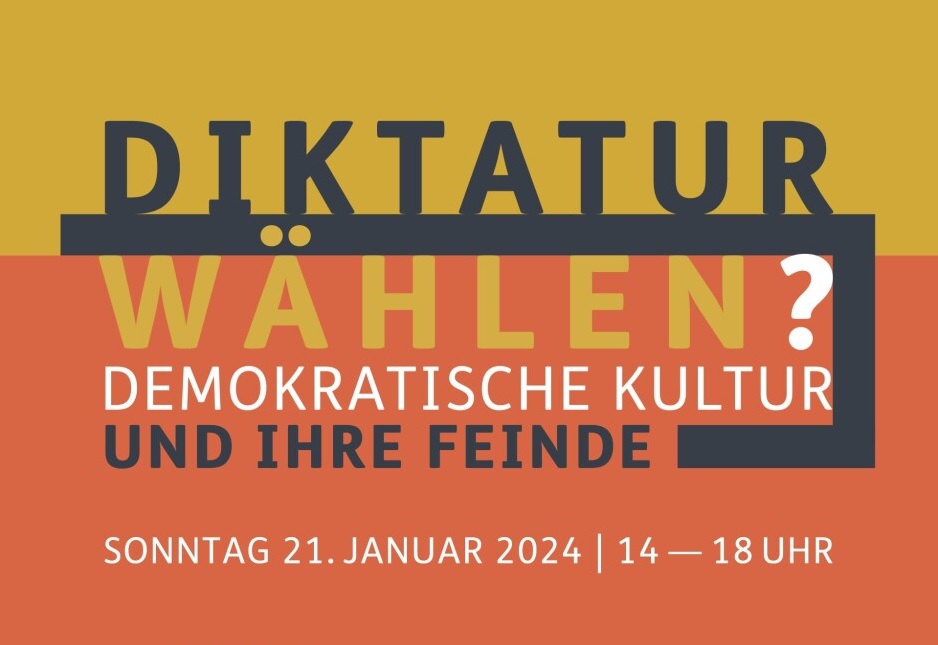
Newsletter I/2024 - Choosing Dictatorship?

Choosing Dictatorship? Democratic Culture and Its Enemies

We were invited to the Jewish Community of Berlin on January 21, 2024 to hold our event on the occasion of the 82nd annual commemoration of the Wannsee Conference. The following lecture, held by our colleagues Aya Zarfati and Dr. Matthias Haß, introduced a two-part discussion on the parallels between the current political situation and the Weimar Republic and to consider what actions can be taken in the areas of justice, education, media, art and culture.

Text für alternative Bildbeschreibung: 

Der Text auf dem Bild fragt: "Diktatur wählen?" und thematisiert die "demokratische Kultur und ihre Feinde". Das Datum ist der 21. Januar 2024, von 14 bis 18 Uhr.

Newsletter II/2023 - Continuity and Persistence of Antisemitism

Dear Readers,

Having selected antisemitism as this year’s focus, we have sought to address it in multiple ways, both internally and externally. This newsletter, introduced by our director Deborah Hartmann, thus also touches on aspects of this topic, sometimes explicitly and other times indirectly...

Ein schwarzer Kugelschreiber liegt auf einem Blatt mit dem Logo und den Kontaktdaten des Hauses der Wannsee-Konferenz. Das Blatt ist beschrieben und zeigt Informationen zur Gedenk- und Bildungsstätte.
© GHWK Berlin

Warsaw Ghetto Uprising

It was 80 years ago, in spring 1943, that the SS and police in Warsaw eliminated the remnants of the once largest Jewish community in Europe – a community that put up great resistance in the process. The work of the perpetrators is uniquely documented in the final report of the commanding SS and police officer Jürgen Stroop. Martin Cüppers, scientific head of the Forschungsstelle Ludwigsburg at the University of Stuttgart, has taken a closer look at this primary source...

Das Bild zeigt einen historischen Schriftzug: "Es gibt keinen jüdischen Wohnbezirk - in Warschau mehr!" Darüber hinaus sind Stempel mit Angaben zum Internationalen Militärtribunal in Nürnberg zu sehen. Der Text reflektiert die erzwungene Vertreibung jüdischer Menschen während des Zweiten Weltkriegs.

Hey Chat GPT, can you tell me what the Wannsee Conference was?

On 10 May 2023, we held the symposium “Thinking with Algorithms?” with educators from different fields. It focused on the challenges and opportunities created by digitization as well as the problem of online antisemitism. Our research assistant Judith Alberth reported on the event...

Text auf einem Veranstaltungsplakat mit dem Titel "MIT ALGORITHMEN (GE)DENKEN?". Es geht um die Herausforderungen und Perspektiven digitaler Geschichtsermittlung und Strategien gegen (online-)Antisemitismus. Datum: 10. Mai 2023, 9:30 bis 17:00 Uhr. Ausgerichtet für Multiplikatoren aus Kultur, Bildung, Verwaltung und Polizei.

"Antisemitism is socially unacceptable."

We invited representatives of various professional groups with whom we organize training seminars to join us in an exchange of ideas at the symposium “Thinking with Algorithms?” held on 10 May 2023. Winfrid Wenzel, Antisemitism Commissioner for the Berlin Police, also attended the event and we met him beforehand for an interview...

Das Bild zeigt einen blauen Davidstern auf einem gelben Hintergrund. Innerhalb des Sterns steht in weißer Schrift "Jüdisches Leben und Polizei". In der Mitte des Sterns ist ein Wappen mit einem Löwen abgebildet.

Webinar Series: Anniversaries in 2023

The year 2023 marks the 80th anniversary of the Rosenstrasse protests in Berlin and the first deportations of Sinti and Roma from Germany to Auschwitz; it is also the 90th anniversary of the boycott of Jewish-owned stores. In the first half of the year, the Education and Research Department organized a series of webinars…

Der Text beschreibt eine Veranstaltung zur historischen politischen Bildung mit dem Schwerpunkt auf Ausgrenzung, Deportation und Widerstand. Es werden Daten und Themen aufgeführt, darunter Proteste 1943 und die Deportation von Sinti und Roma. Eine Einladung zu Online-Events wird betont.

#Antisemitism: Workshop Exhibition “Scandal or Normality?”

In January 2023, we launched an exhibition on antisemitism since 1945 in our 1st-floor hallway. Each month we create a new poster to commemorate an antisemitic attack that occurred in the past seven decades. The exhibition illustrates how hatred towards Jews has been a continuous phenomenon in Germany and provides examples of the many different manifestations of this antisemitism...

Eine Wand mit mehreren Informationen, die durch orangefarbene Rahmen hervorgehoben sind. Es gibt auch bunte Notizzettel in verschiedenen Farben, die zusätzliche Hinweise oder Themen ansprechen. Die Texte behandeln verschiedene Jubiläen und relevante Themen. Die Präsentation ist übersichtlich und strukturiert.
© GHWK Berlin

Stopping Antisemitism Together

The GHWK is one of the supporters of the “Education and Weeks of Action against Antisemitism,” a campaign that has taken place annually for twenty years. Nikolas Lelle from the Amadeu Antonio Foundation considered the past and future of this campaign...

Plakat mit dem Text: „Was Israel da macht, ist doch das Gleiche wie damals bei … STOPP! Israel mit dem Nationalsozialismus gleichsetzen – so viel mehr als nur verkehrt.“ Ein Hinweis zur Website gegen Antisemitismus ist ebenfalls enthalten.

Kujau’s Hitler and the Wannsee Conference

In 1983, Stern magazine announced that it had acquired Hitler’s diaries. The editor-in-chief wrote about it in an editorial: “Some of the history of the Third Reich will now have to be rewritten.” The northern German broadcasting company NDR discovered what he meant by this and put the entire fake version online for everyone to read. The Wannsee Conference also plays a curious role in these forged diaries...

Das Bild zeigt ein Buch mit dem Titel "Die echten falschen »Hitler-Tagebücher«". Es ist herausgegeben von John Goetz und enthält einen Vorwort sowie eine Einleitung. Das Buch steht auf einem Regal, umgeben von weiteren Büchern.
© GHWK Berlin

Training "Who writes history and why?"

In February, multipliers from various Israeli memorial sites were hosted by us for a week-long training course under the motto "Who writes history and why? Historikerstreit 2.0, 'competing' memories and the discourse about the Holocaust in contemporary Germany". We asked them to tell us here about their impressions...

Eine Gruppe von Personen sitzt an einem Tisch und hört einem Referenten zu, der mit Gesten Informationen präsentiert. An der Wand hinter ihnen hängen verschiedene Plakate und Diagramme. Es herrscht eine kreative und kollaborative Atmosphäre in einem Besprechungsraum.
© GHWK Berlin, Aya Zarfati

Newsletter 1/2023 – Annual Theme of 2023: Antisemitism before, during, and after the Shoah

Editorial

Our director Deborah Hartmann is looking ahead: For the first time, we have chosen a theme to accompany 2023. On the 90th anniversary of the Nazi’s rise to power, we will be focusing on Antisemitism...

Auf einem Tisch liegt ein schwarzer Kugelschreiber neben einem weißen Blatt Papier, auf dem der Text "GEDENK- UND BILDUNGSSTÄTTE HAUS DER WANNSEE-KONFERENZ" gedruckt ist. Der Hintergrund des Bildes ist dunkel.
© GHWK Berlin, Franziska Thole

Annual commemoration of the Wannsee Conference, Jan. 19, 2023

"...and to alarm the whole world". Jewish Resistance and Self-Assertion in Response to the Shoah - program and registration for our event on the annual commemoration of the meeting at Wannsee, Jan. 19, 2023, 6-9 pm, on site and online, find all information here!

Veranstaltung zum 81. Jahrestag der Wannsee-Konferenz, die am 20. Januar 1942 stattfand. Das Thema befasst sich mit dem jüdischen Widerstand und dem Selbstbehauptungswillen angesichts der Shoah. Der Fokus liegt auf der Notwendigkeit, die Welt zu alarmieren.

Chotzen – Images after Memory

The exhibition by the Israeli artist Inbar Chotzen is on display at the “Villa Oppenheim” in Charlottenburg until 26 March. We contributed a small historical segment from the Chotzen family estate...

Eine alte Postkarte aus dem Jahr 1941 zeigt eine stilisierte Abbildung des Brandenburger Tors, mit einer Person, die links zu sehen ist. Über dem Tor steht eine Statue mit einem Lautsprecher. Die Rückseite enthält handschriftliche Notizen und Adressinformationen.
© Inbar Chotzen

The “Antisemitism and Youth” project

Our new colleague Lucas Frings presents his project “Antisemitism and Youth”, which the Memorial and Educational Site is conducting in cooperation with the University of Duisburg-Essen until 2024...

Bildbeschreibung: Der Flyer zum Fachtag im Haus der Wannsee-Konferenz trägt den Titel „Es ist wichtig, dass man daraus lernt“. Darunter steht „Kritische Reflexionen zur Bildung gegen Antisemitismus“ und das Datum, 13. November 2022.
© GHWK Berlin, Till Gathmann

Reading on the burning of books

2023 marks the 90th anniversary of the National Socialist burning of books. To commemorate the occasion, we will be holding our 6th annual reading on the burning of books, but this year there will be some changes...

Text auf schwarzem Hintergrund: "Lesung zur Bücherverbrennung 2023 – Antisemitismus".
© GHWK Berlin, Christine Kitta

Dates

What are we planning for the commemorative year of 2023? Event information and other dates for the first half of the year in and with our villa can be found here...

Ein offenes Kalenderbuch zeigt die Monate Januar bis Juni 2023. Die Seiten sind leer mit Kästchen für jeden Tag, bereit für Eintragungen. Ein Kugelschreiber liegt auf den Seiten.
© GHWK Berlin, Jennifer Heidtke

Newsletter I/2021 - The Making of our 3rd Permanent Exhibition

Introduction

Dear Sir or Madam, dear friends, the House of the Wannsee Conference Memorial and Educational Site is revamping its Newsletter. In the first issue in the new format, we look back on the creation and conception of our permanent exhibition, which opened in January 2020.

Auf einem Tisch liegt ein schwarzer Kugelschreiber neben einem weißen Blatt Papier, auf dem der Text "GEDENK- UND BILDUNGSSTÄTTE HAUS DER WANNSEE-KONFERENZ" gedruckt ist. Der Hintergrund des Bildes ist dunkel.
© GHWK Berlin, Franziska Thole

Educational standards and curatorial rules

Dr. Elke Gryglewski, former acting director of our museum and member of the New Permanent Exhibition management team, on the synthesis of fundamental parameters of the new permanent exhibition.

Ein aufmerksames Exponat, das eine offene Dokumentation zeigt. Sie enthält grafische Darstellungen und Text, die verschiedene Ministerien und deren Funktionen skizzieren, um einen Überblick über die organisatorische Struktur zu geben.
© GHWK Berlin

Curatorial challenges

Our curators Babette Quinkert and Katharina Zeiher on their work on the exhibition "The Meeting at the Wannsee and the Murder of the European Jews"

Zwei Personen stehen in einem Ausstellungsraum und betrachten eine Informationswand mit Fotografien und Texten. Die Wand zeigt eine Familiengeschichte oder Stammbaum. Im Vordergrund ist ein Diagramm zu sehen, das Informationen strukturiert darstellt.
© GHWK Berlin, Thomas Bruns

The focus group in conversation

"It was like seeing something that others cannot see." Our focus group, ten people representing the fields of seeing, hearing, moving, understanding and feeling from associations of people with disabilities, reports on their participation - from the very beginning.

Eine Gruppe von Personen sitzt an Tischen in einem Besprechungsraum. Einige Teilnehmer sprechen miteinander, während andere Notizen machen. Im Hintergrund hängen Bilder und Daten von 1937 bis 1946 an der Wand, die einen historischen Kontext vermitteln.
© GHWK Berlin

Upcoming event

September 13-14, 2021: From Dictatorship to Democracy. Symposium by Invitation of the Research Project »The Berlin Administration of Justice after 1945« - with scholars and lawyers from Italy, Japan, Poland, Spain, and Germany. Program and registration here!

Ein Banner für ein Symposium mit dem Titel „Vom Dictatorship zur Demokratie“, das am 13. und 14. September 2021 stattfindet. Der Hintergrund zeigt eine Schriftrolle oder Dokumente, die möglicherweise historische Kontexte darstellen.
© GHWK Berlin, Christine Kitta